
Understanding What to Expect from Your Pilates Journey
Starting Pilates is one of the best ways to improve strength, posture, flexibility, and body awareness. But one question almost every beginner asks is: “When will I start to see results?”
The answer isn’t the same for everyone. How quickly you notice changes depends on factors such as your fitness level, consistency, class type, and how effectively you engage the right muscles. As a physiotherapist, I’ve seen clients transform their movement patterns, relieve pain, and gain strength through Pilates—but these results follow a predictable physiological timeline.
Understanding how long it takes to see Pilates results can help you set realistic expectations and stay motivated as your body adapts.
What “Results” Really Mean in Pilates
Many people think of results as visible muscle tone or weight change. But Pilates offers a broader spectrum of benefits—many of which begin internally before they show outwardly. When asking how long does it take to see Pilates results, it’s important to consider more than just appearance.
Here’s what “results” may look like:
- Improved posture and alignment
- Stronger and more stable core muscles
- Greater flexibility and range of motion
- Reduced back, neck, or hip discomfort
- Better balance and body awareness
- Increased muscle tone and endurance
The Physiological Timeline of Pilates Progress
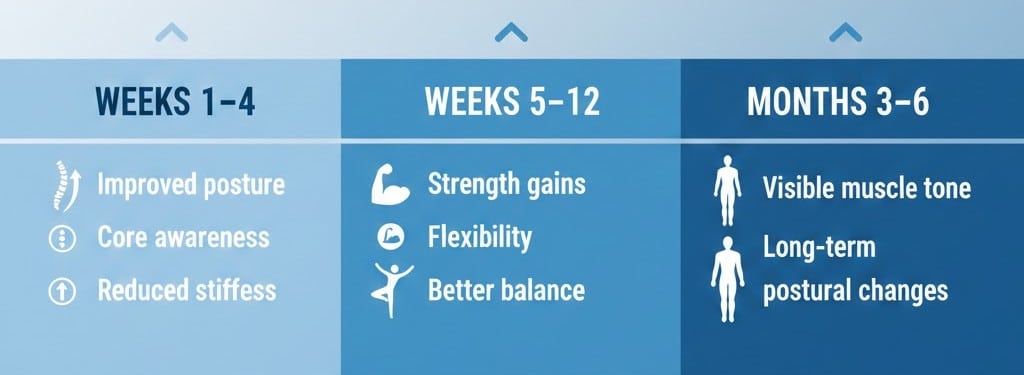
Weeks 1–4: Building the Mind–Body Connection
The first month is about learning to move with precision and control. Your brain and muscles start communicating more effectively—a process known as neuromuscular adaptation. This is why you might “feel” stronger and more stable early on, even though visible muscle changes haven’t yet occurred.
During this stage, expect:
- Better coordination and awareness of your core
- Reduced stiffness or discomfort
- Improved posture while sitting and standing
Weeks 5–12: Strength, Flexibility, and Control
Between weeks five and twelve, muscular adaptations become more noticeable. If you’re still asking how long does it take to see Pilates results, this is often the stage where progress becomes obvious both physically and functionally.
Typical results during this period include:
- Noticeable improvements in core strength
- Smoother, more controlled movement patterns
- Increased flexibility, particularly in the hips and hamstrings
- Enhanced posture and balance
This is often when friends and colleagues begin to comment on changes in how you move and carry yourself.
Months 3–6: Visible and Functional Transformation
By the three-month mark, consistent Pilates training begins to reshape how your body looks and functions. Muscle tone becomes more defined, movement patterns more automatic, and daily activities start to feel easier. If your goal includes pain management or postural correction, this is also when you’ll likely notice longer-lasting relief.
During this stage, expect:
- Noticeable body composition or tone improvements
- Enhanced endurance and strength in deep stabilising muscles
- Reduced injury risk from better alignment and muscle balance
- Greater confidence in movement and coordination
For most people, 8–12 weeks marks the point of feeling and seeing progress, while 3–6 months delivers more significant, lasting results.
Factors That Influence How Quickly You See Results
Your progress depends on several key variables:
- Consistency: Practising two to four times per week produces the best outcomes. Irregular participation slows adaptation.
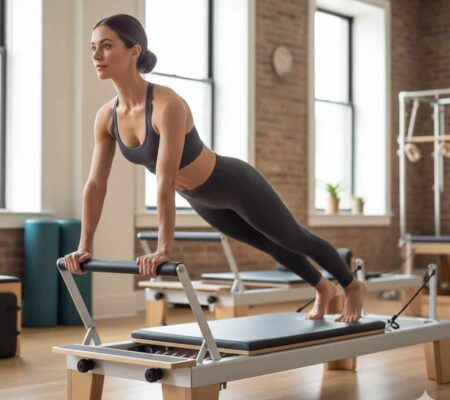
- Type of Pilates: Reformer-based sessions tend to enhance strength and control faster, while mat work builds foundational stability and flexibility.
- Technique quality: Proper form and mindful activation of target muscles matter more than intensity or repetition count.
- Baseline fitness and goals: Beginners may feel results quickly due to improved awareness, while experienced individuals may need longer to see visible changes.
- Lifestyle factors: Nutrition, hydration, sleep, and stress management all influence recovery and performance.
Research supports that consistent practice—at least twice per week—leads to significant measurable changes in muscle tone, posture, and flexibility within 10–12 weeks.
How to Maximise Your Pilates Results
- Commit to regular sessions: Two to four classes per week is ideal.
- Focus on form: Engage your core, align your spine, and control your breathing.
- Progress gradually: As you master basic exercises, move toward more challenging sequences or resistance-based work.
- Combine with balanced nutrition: Fuel your body with adequate protein and hydration to support muscle recovery and growth.
- Track your progress: Record improvements in flexibility, core endurance, or posture instead of relying solely on visual cues.
- Prioritise recovery: Give your body time to adapt—sleep and rest are vital to strength gains.
Remember, quality and consistency will always outperform intensity without control.
Common Mistakes That Delay Progress
- Inconsistency: Sporadic sessions prevent your body from building lasting adaptations.
- Rushing the process: Expecting visible changes too quickly can lead to frustration or injury.
- Poor technique: Without proper supervision, compensatory movements can limit results.
- Neglecting complementary habits: Sleep, nutrition, and stress management play major roles in recovery and muscle development.
Avoiding these pitfalls ensures a smoother, safer, and more effective Pilates journey.
The Takeaway
While the exact timeline varies from person to person, most people start feeling noticeable improvements within 3–4 weeks of consistent Pilates practice and seeing visible changes around 8–12 weeks. Over the course of 3–6 months, those benefits deepen—improving posture, core strength, flexibility, and movement efficiency.
Pilates isn’t about quick transformations—it’s about creating lasting alignment, balance, and body control. The more consistent and mindful your practice, the greater and more sustainable your progress will be.
If you’re ready to take your movement to the next level, consider partnering with The Movement Mill. Their team of experienced physiotherapists and exercise professionals combine clinical expertise with personalised Pilates-based programs designed to improve posture, reduce pain, and build long-term strength. With guided support and evidence-based training, The Movement Mill helps you move better, feel stronger, and achieve lasting results.
FAQs
How long does it take to see Pilates results for beginners?
Most beginners start to feel Pilates results within 3–4 weeks of consistent practice, such as improved posture, better core engagement, and reduced stiffness. Visible Pilates results, including muscle tone and improved movement control, usually appear after 8–12 weeks. The timeline depends on consistency, class type, and correct technique, especially when Pilates is guided by a physiotherapist.
How often should you do Pilates to see results?
To see measurable Pilates results, research suggests practising 2–4 times per week. Two sessions per week are enough to improve core stability and flexibility, while three to four sessions per week can accelerate strength gains and postural improvements. Consistency matters more than intensity—regular, well-executed sessions deliver better long-term results than sporadic high-intensity workouts.
Can Pilates change your body shape and posture?
Yes, Pilates can change both body shape and posture over time. By strengthening deep stabilising muscles and improving alignment, Pilates helps create a longer, leaner appearance and more upright posture. Most people notice visible changes in posture and muscle tone after 8–12 weeks, with more significant transformation occurring over 3–6 months of regular practice.
Does reformer Pilates give faster results than mat Pilates?
Reformer Pilates often delivers faster strength and control improvements because adjustable resistance challenges muscles more effectively. Mat Pilates, however, is excellent for building foundational core stability and body awareness. Both forms are effective—results depend on technique quality, progression, and consistency. Many physiotherapist-led programs combine both to maximise Pilates results safely.